Included with subscription
A subscription unlocks every workbook. Preview chapters are always free.
Subscribe for full accessSign in to start previewFirst 6 lessons free. Adds to your library so you can pick up later.
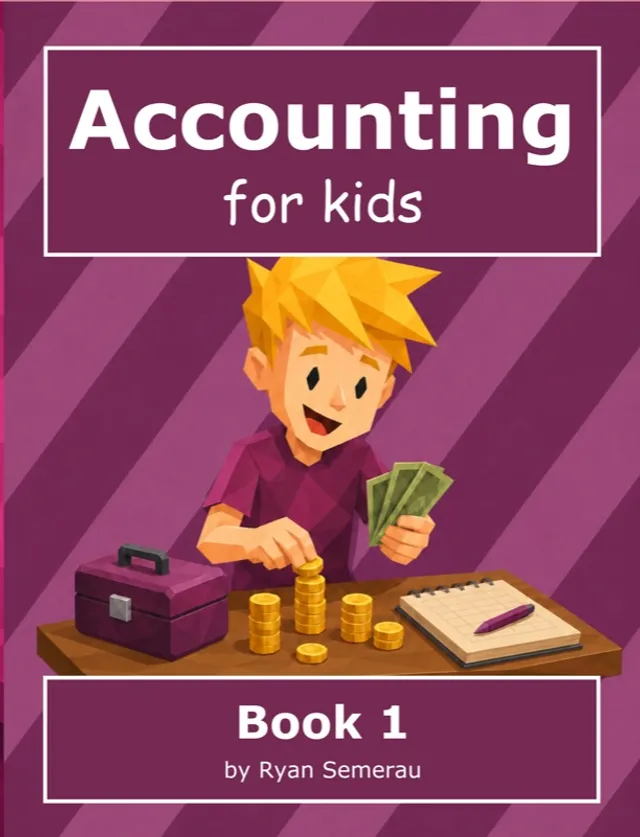
Accounting for Kids - Book 1
by Ryan Semerau
The first book in the Accounting for Kids series. Teaches the complete accounting cycle from scratch - transactions, journals, ledgers, debits and credits, and how to build an income statement, balance sheet, and cash flow statement. Real accounting skills in plain language for young readers.
Contents
16 chapters · 76 lessons · first 6 free- IntroductionFree
1 · The Foundation
- 1.1 · What Is AccountingFree
- 1.2 · Who Needs AccountingFree
- 1.3 · Accounting vs BookkeepingFree
- 1.4 · The Language of BusinessFree
- Chapter 1 TestFree
2 · Transactions - Where It All Starts
- 2.1 · What Is a TransactionFree
- 2.2 · Every Transaction Has Two Sides🔒
- 2.3 · Source Documents🔒
- 2.4 · Recording Transactions🔒
- Chapter 2 Test🔒
3 · The Accounting Equation
- 3.1 · Assets: What You Own🔒
- 3.2 · Liabilities: What You Owe🔒
- 3.3 · Owner's Equity: What's Left🔒
- 3.4 · The Equation That Always Balances🔒
- Chapter 3 Test🔒
4 · Accounts - Categories for Everything
- 4.1 · What Is an Account🔒
- 4.2 · The Five Types of Accounts🔒
- 4.3 · The Chart of Accounts🔒
- 4.4 · Naming Accounts Clearly🔒
- Chapter 4 Test🔒
5 · Debits and Credits
- 5.1 · Debits and Credits Are Just Left and Right🔒
- 5.2 · Which Side Increases Which🔒
- 5.3 · T-Accounts🔒
- 5.4 · Debits Always Equal Credits🔒
- Chapter 5 Test🔒
6 · The Journal - Recording Transactions
- 6.1 · What Is a Journal🔒
- 6.2 · Writing a Journal Entry🔒
- 6.3 · Simple Entries and Compound Entries🔒
- 6.4 · Practice: Recording a Day's Transactions🔒
- Chapter 6 Test🔒
7 · The Ledger - Organizing by Account
- 7.1 · What Is a Ledger🔒
- 7.2 · Posting: Journal to Ledger🔒
- 7.3 · Account Balances🔒
- 7.4 · The General Ledger🔒
- Chapter 7 Test🔒
8 · The Trial Balance - Checking Your Work
- 8.1 · What Is a Trial Balance🔒
- 8.2 · Preparing a Trial Balance🔒
- 8.3 · What a Trial Balance Catches🔒
- 8.4 · Finding and Fixing Errors🔒
- Chapter 8 Test🔒
9 · Revenue and Expenses
- 9.1 · Revenue: When You Earn It🔒
- 9.2 · Expenses: When You Use Them Up🔒
- 9.3 · Matching: Expenses Follow Revenue🔒
- 9.4 · Periods: Slicing Time🔒
- Chapter 9 Test🔒
10 · The Income Statement
- 10.1 · What Is an Income Statement🔒
- 10.2 · Revenue Section🔒
- 10.3 · Expense Section🔒
- 10.4 · Net Income: The Bottom Line🔒
- Chapter 10 Test🔒
11 · The Balance Sheet
- 11.1 · What Is a Balance Sheet🔒
- 11.2 · Assets Section🔒
- 11.3 · Liabilities and Owner's Equity🔒
- 11.4 · Reading a Balance Sheet🔒
- Chapter 11 Test🔒
12 · The Cash Flow Statement
- 12.1 · Cash Is Not the Same as Profit🔒
- 12.2 · What the Cash Flow Statement Shows🔒
- 12.3 · Three Sections🔒
- 12.4 · Reading Cash Flow🔒
- Chapter 12 Test🔒
13 · Adjusting Entries
- 13.1 · Why Adjustments🔒
- 13.2 · Prepaid Expenses🔒
- 13.3 · Accrued Expenses and Revenue🔒
- 13.4 · Depreciation🔒
- Chapter 13 Test🔒
14 · Closing the Books
- 14.1 · Temporary and Permanent Accounts🔒
- 14.2 · Closing Entries🔒
- 14.3 · The Accounting Cycle🔒
- 14.4 · Starting Fresh🔒
- Chapter 14 Test🔒
15 · Putting It All Together
- 15.1 · A Full Month at the Snack Shop🔒
- 15.2 · From Journal to Statements🔒
- 15.3 · What the Statements Tell You🔒
- 15.4 · You Are an Accountant🔒
- Chapter 15 Test🔒
What you'll learn
- ✓What accounting is and why every business needs it
- ✓How to record transactions using journals and ledgers
- ✓The accounting equation: Assets = Liabilities + Owner's Equity
- ✓How debits and credits work
- ✓How to build an income statement from scratch
- ✓How to build a balance sheet from scratch
- ✓How to build a cash flow statement from scratch
- ✓What adjusting entries are and why they matter
- ✓How to close the books at the end of a period
- ✓The full accounting cycle from start to finish
How to use this workbook
15 chapters, designed for one chapter per week (4 short lessons per week plus a chapter test). Each lesson takes about 15-20 minutes - read the lesson, talk it over with the AI tutor, then answer a few short questions in your own words.
Prerequisites
None strictly required. Economics for Kids Book 1 (scarcity, choices) and Book 6 (business finance basics) are helpful but not necessary - this book is self-contained.