Included with subscription
A subscription unlocks every workbook. Preview chapters are always free.
Subscribe for full accessSign in to start previewFirst 6 lessons free. Adds to your library so you can pick up later.
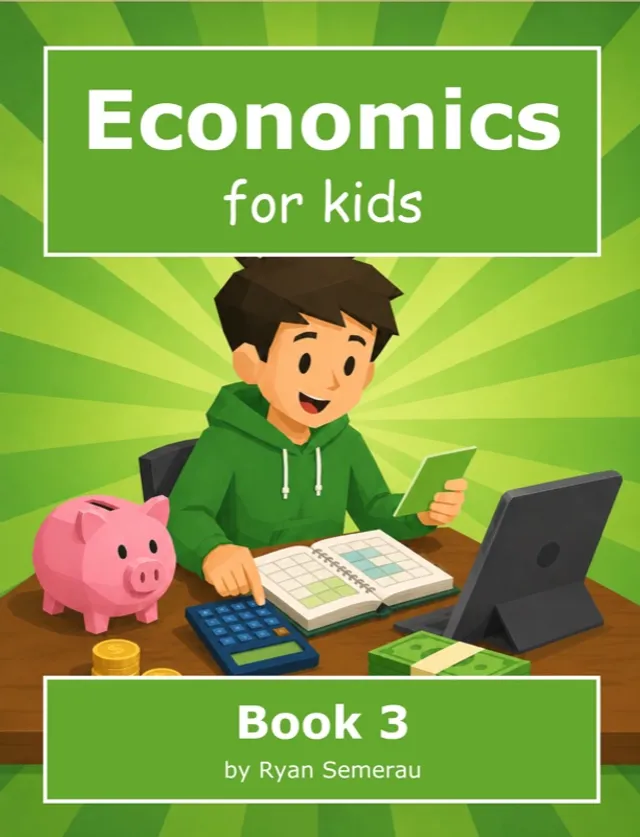
Economics for Kids — Book 3
by Ryan Semerau
The third book in the Economics for Kids series. Covers personal finance essentials — budgets, bank accounts, paychecks, credit cards, loans, insurance, investing, and staying safe from scams. Practical money skills explained in plain language for young readers.
Contents
16 chapters · 76 lessons · first 6 free- IntroductionFree
1 · Money Choices at Home
- 1.1 · Budget ConstraintFree
- 1.2 · Goals and TimingFree
- 1.3 · Opportunity CostFree
- 1.4 · A simple budget plan that actually worksFree
- Chapter 1 TestFree
2 · Cash Flow
- 2.1 · Cash Flow BasicsFree
- 2.2 · Bills🔒
- 2.3 · Subscriptions🔒
- 2.4 · Timing Traps🔒
- Chapter 2 Test🔒
3 · Paychecks and Taxes
- 3.1 · Gross Pay🔒
- 3.2 · Withholding🔒
- 3.3 · Payroll Taxes🔒
- 3.4 · Filing Taxes🔒
- Chapter 3 Test🔒
4 · Total Cost
- 4.1 · Sticker price vs total cost🔒
- 4.2 · Sales Tax🔒
- 4.3 · Property Taxes🔒
- 4.4 · Inflation🔒
- Chapter 4 Test🔒
5 · Opening Accounts
- 5.1 · Accounts🔒
- 5.2 · Who Can Open Accounts🔒
- 5.3 · Choosing a Bank🔒
- 5.4 · Using Your Account🔒
- Chapter 5 Test🔒
6 · Checking Accounts
- 6.1 · Checking Basics🔒
- 6.2 · Holds🔒
- 6.3 · Overdrafts🔒
- 6.4 · Avoiding Fees🔒
- Chapter 6 Test🔒
7 · Debit Cards
- 7.1 · Debit cards vs cash🔒
- 7.2 · Pending Charges🔒
- 7.3 · Card Protection🔒
- 7.4 · Online Payments🔒
- Chapter 7 Test🔒
8 · Saving Products
- 8.1 · Why Save🔒
- 8.2 · Savings Accounts🔒
- 8.3 · Money Markets🔒
- 8.4 · CDs🔒
- Chapter 8 Test🔒
9 · Shopping Smart
- 9.1 · Sales Timing🔒
- 9.2 · Loyalty Programs🔒
- 9.3 · Membership Stores🔒
- 9.4 · Poverty Premium🔒
- Chapter 9 Test🔒
10 · Big Loans
- 10.1 · Loan Basics🔒
- 10.2 · Auto Loans🔒
- 10.3 · Renting vs. Owning🔒
- 10.4 · Student Loans🔒
- Chapter 10 Test🔒
11 · Credit Cards
- 11.1 · Credit Card Basics🔒
- 11.2 · Statements and Interest🔒
- 11.3 · Minimum Payments🔒
- 11.4 · Fees and Rewards🔒
- Chapter 11 Test🔒
12 · Credit History
- 12.1 · Credit Reports🔒
- 12.2 · Credit Scores🔒
- 12.3 · Building Credit🔒
- 12.4 · Fixing Credit🔒
- Chapter 12 Test🔒
13 · Insurance
- 13.1 · Why Insurance🔒
- 13.2 · Health Insurance🔒
- 13.3 · Auto Insurance🔒
- 13.4 · Renters Insurance🔒
- Chapter 13 Test🔒
14 · Investing Basics
- 14.1 · Saving vs investing🔒
- 14.2 · Diversification🔒
- 14.3 · Retirement Accounts🔒
- 14.4 · Fees and Patience🔒
- Chapter 14 Test🔒
15 · Scams and Identity
- 15.1 · How Scams Work🔒
- 15.2 · Common Scams🔒
- 15.3 · Account Safety🔒
- 15.4 · What to Do🔒
- Chapter 15 Test🔒
What you'll learn
- ✓How to create and understand a budget
- ✓What cash flow is and why timing matters
- ✓How paychecks and taxes work
- ✓The difference between checking accounts, savings accounts, and debit cards
- ✓How to shop smart and compare total costs
- ✓What loans, credit cards, and credit history are and how they work
- ✓Why insurance exists and how it protects you
- ✓The basics of investing and growing money over time
- ✓How to spot scams and protect your identity
How to use this workbook
15 chapters, designed for one chapter per week (4 short lessons per week plus a chapter test). Each lesson takes about 15–20 minutes — read the lesson, talk it over with the AI tutor, then answer a few short questions in your own words. Your work is graded by the tutor and you can retake a chapter as many times as you need.
Prerequisites
Completion of Economics for Kids Books 1 and 2, or a solid understanding of basic economics concepts like scarcity, trade, contracts, risk, and incentives.